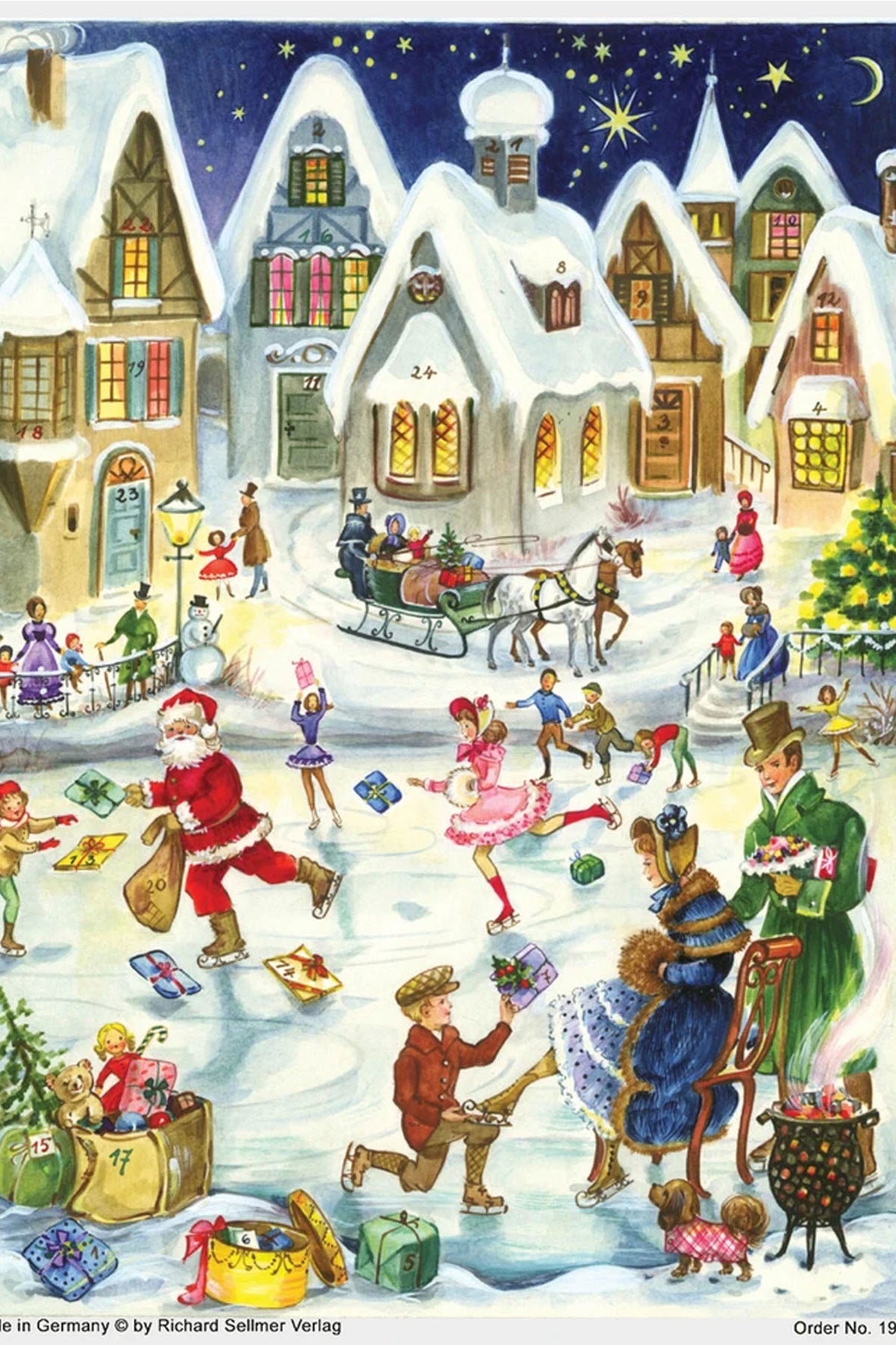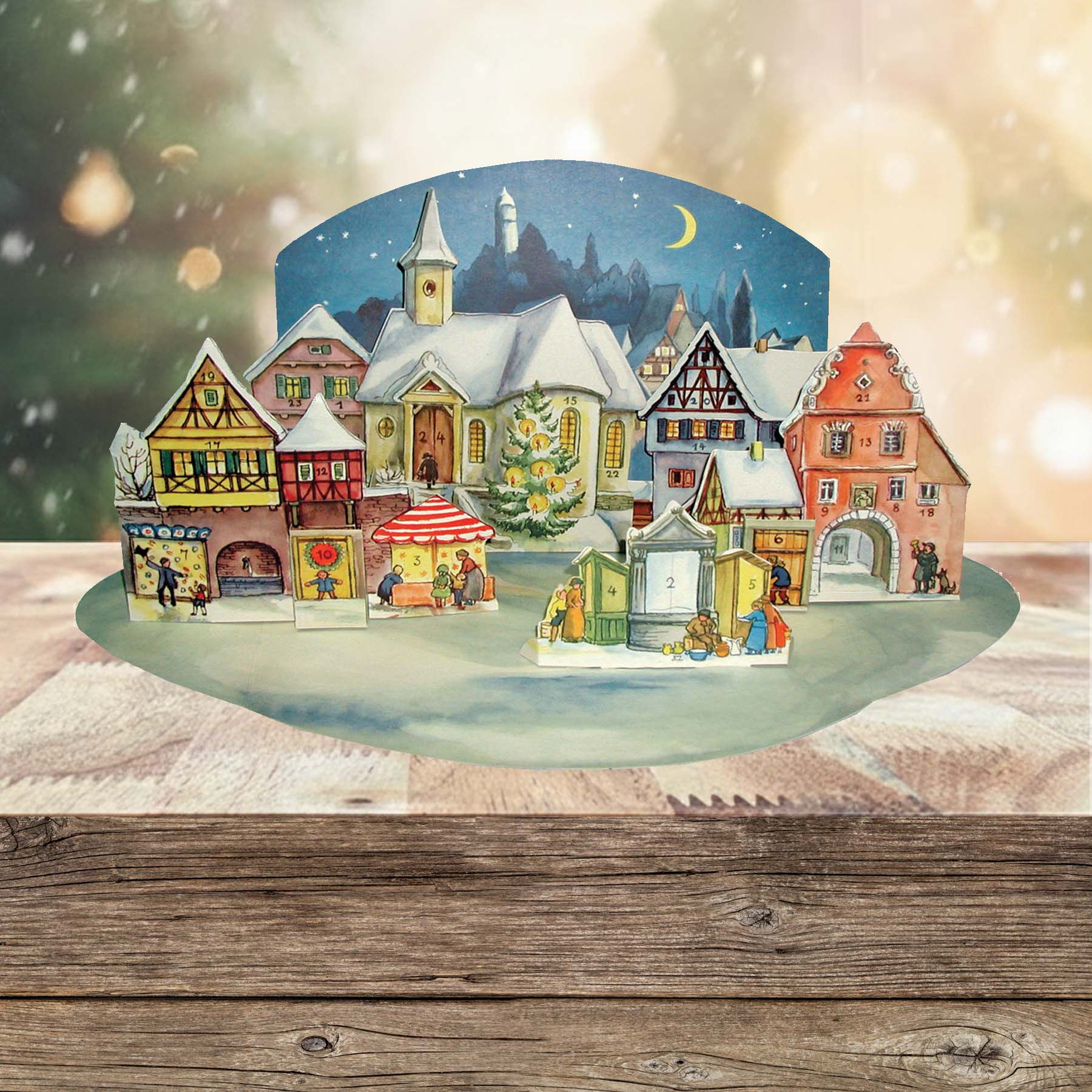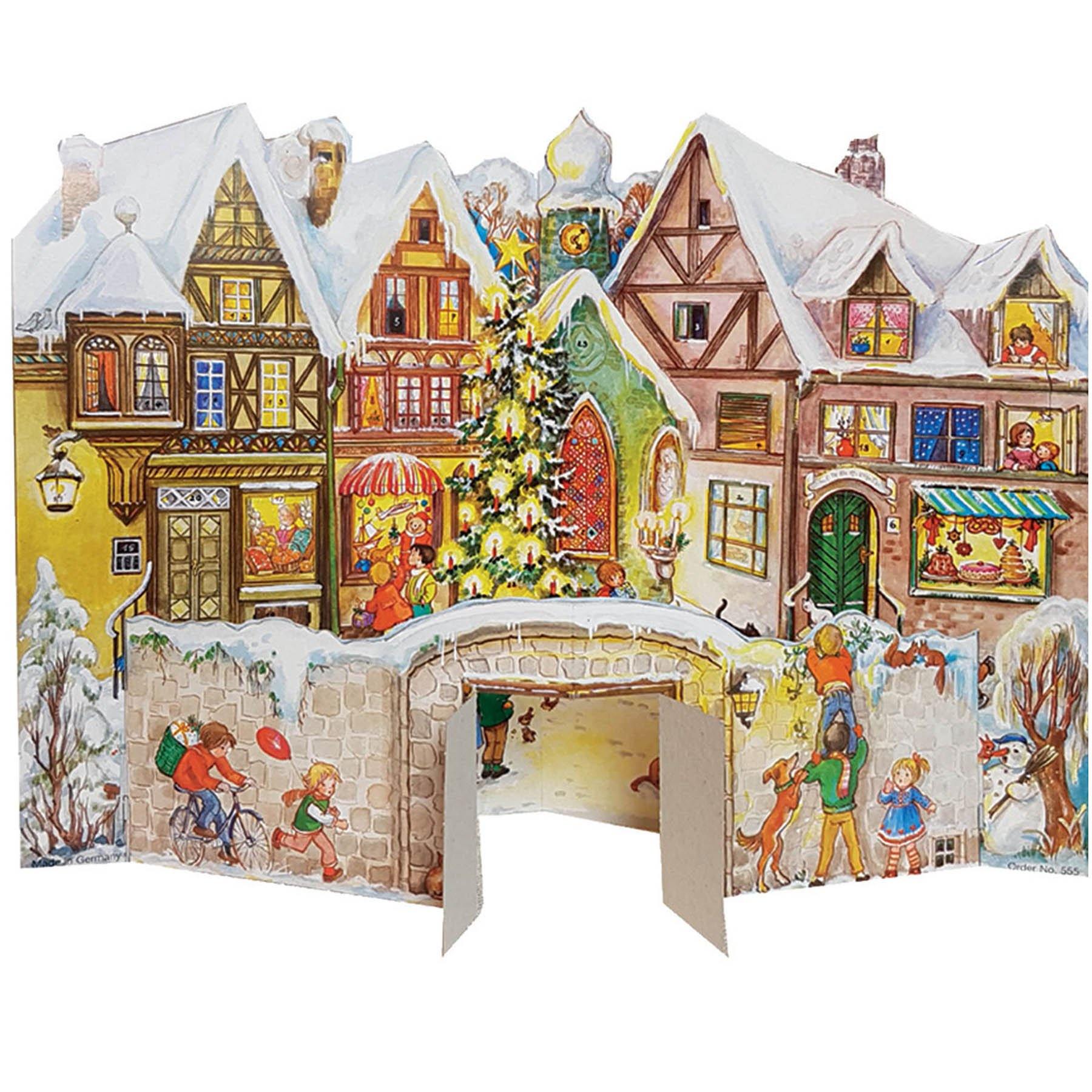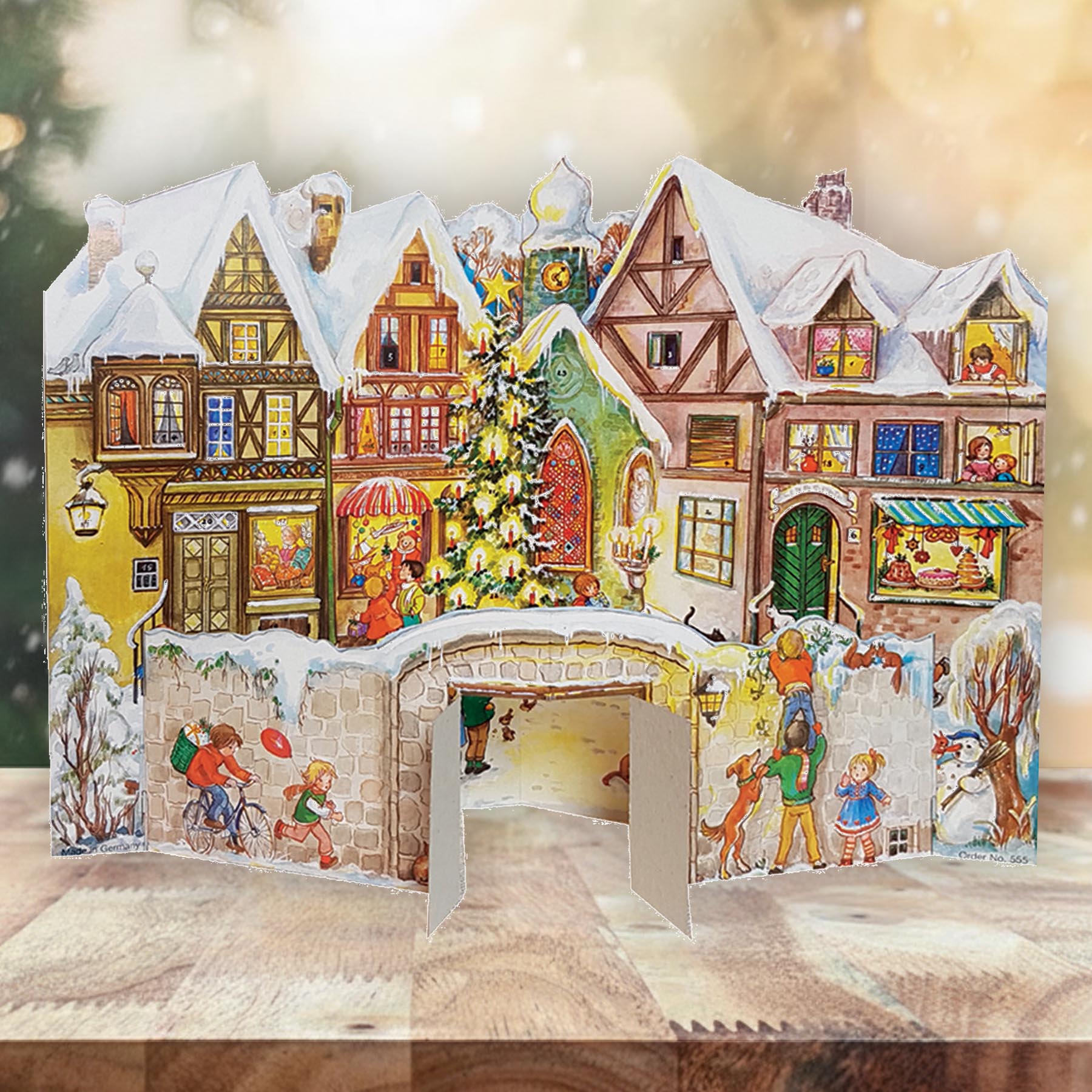

The Advent calendar, which is now an indispensable part of the Advent season, was not created until the beginning of the 20th century.
~However, its actual origins can be traced back to the 19th century. The first forms of the Advent calendar came from Protestant circles.
In religious families, 24 pictures were gradually hung on the wall during December. A simple but no less effective alternative was 24 chalk marks drawn on the wall or door, one of which the children were allowed to wipe away each day (the so-called tally calendar).
Alternatively, straws were placed in a manger, one for each day until Christmas Eve.
>Other forms included the Christmas clock or an Advent candle that could be burned down each day to the next marking. The earliest known form of a handmade Advent calendar dates from 1851. Those who wanted to order an Advent calendar had to wait a little longer: In 1902, the Evangelical Bookshop in Hamburg published what was probably the first printed Advent calendar: A Christmas clock for children, whose use was entirely comparable to that of the one published in 1922 by St. Johannis Printing House (Dominik Wunderlin, lic. phil., Switzerland).
In 1904, a Christmas calendar was included as a gift with the “Neues Tagblatt Stuttgart.” However, the Lower Austrian State Museum gives 1903 as the year in which the printed Advent calendar was created.